01
Restaurant website design
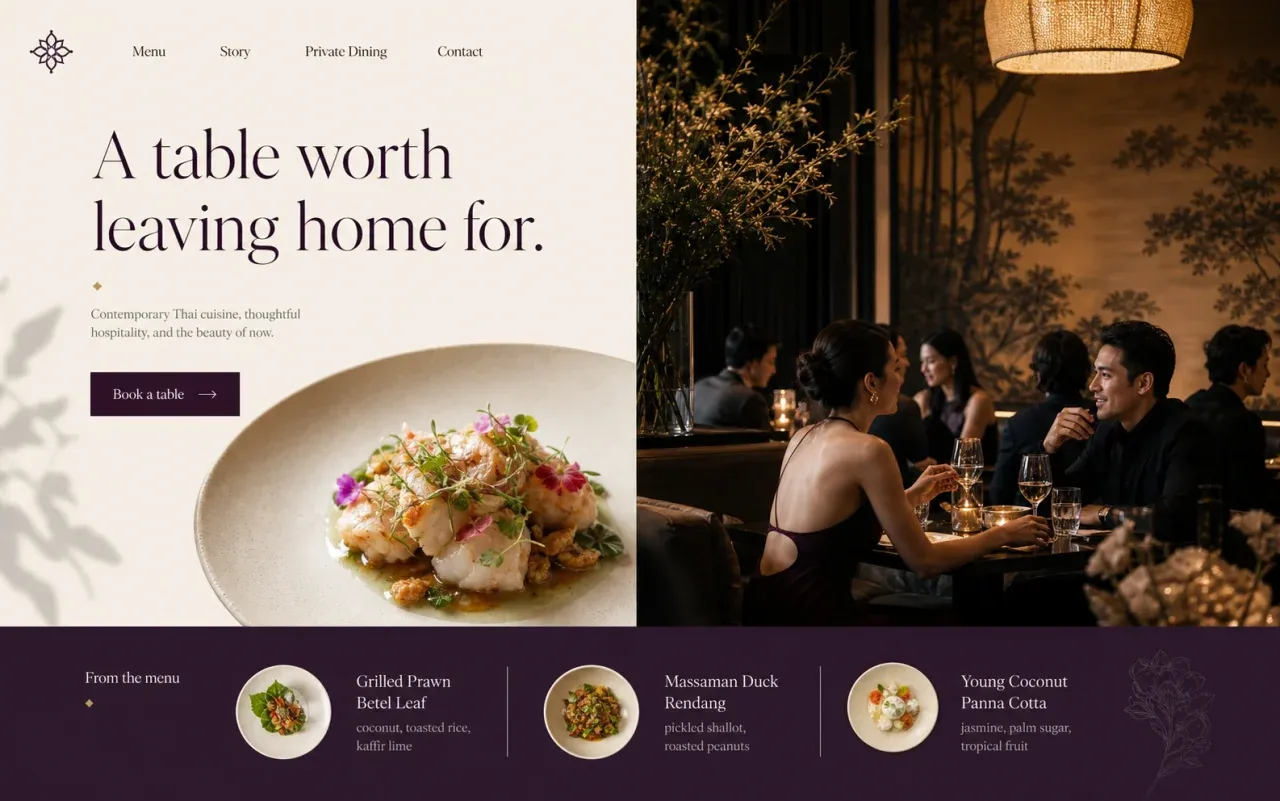
A restaurant website should present the menu and atmosphere properly, then make opening hours, location and table reservations easy to find.
- Menu structure
- Table reservations
- Local search
- Photography direction
 Bangkok Web AgencyDiscuss a project
Website ideas by industry
A hotel guest, school parent and industrial buyer arrive with different questions. These concepts show how a website can organize the information and functions each audience needs.

Concept work
Each example explores a plausible content structure, visual direction and set of website features for one type of business. Our completed client work is listed separately in the portfolio.
20 website examples
The notes below explain what the website needs to communicate and which functions are likely to matter.
Websites shaped around choosing, planning, booking and visiting.
A restaurant website should present the menu and atmosphere properly, then make opening hours, location and table reservations easy to find.
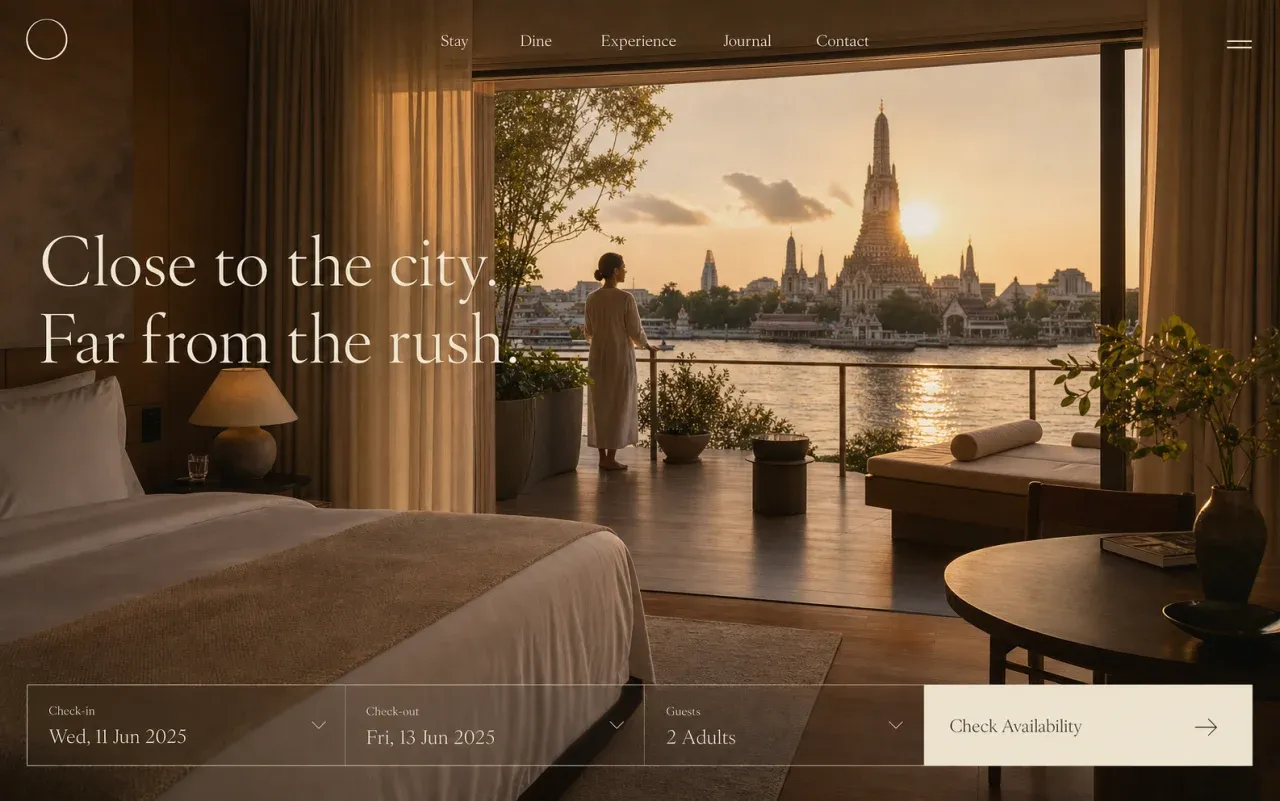
Hotel photography needs room to work, but visitors must also be able to compare rooms, check current offers and reach the direct booking system quickly.
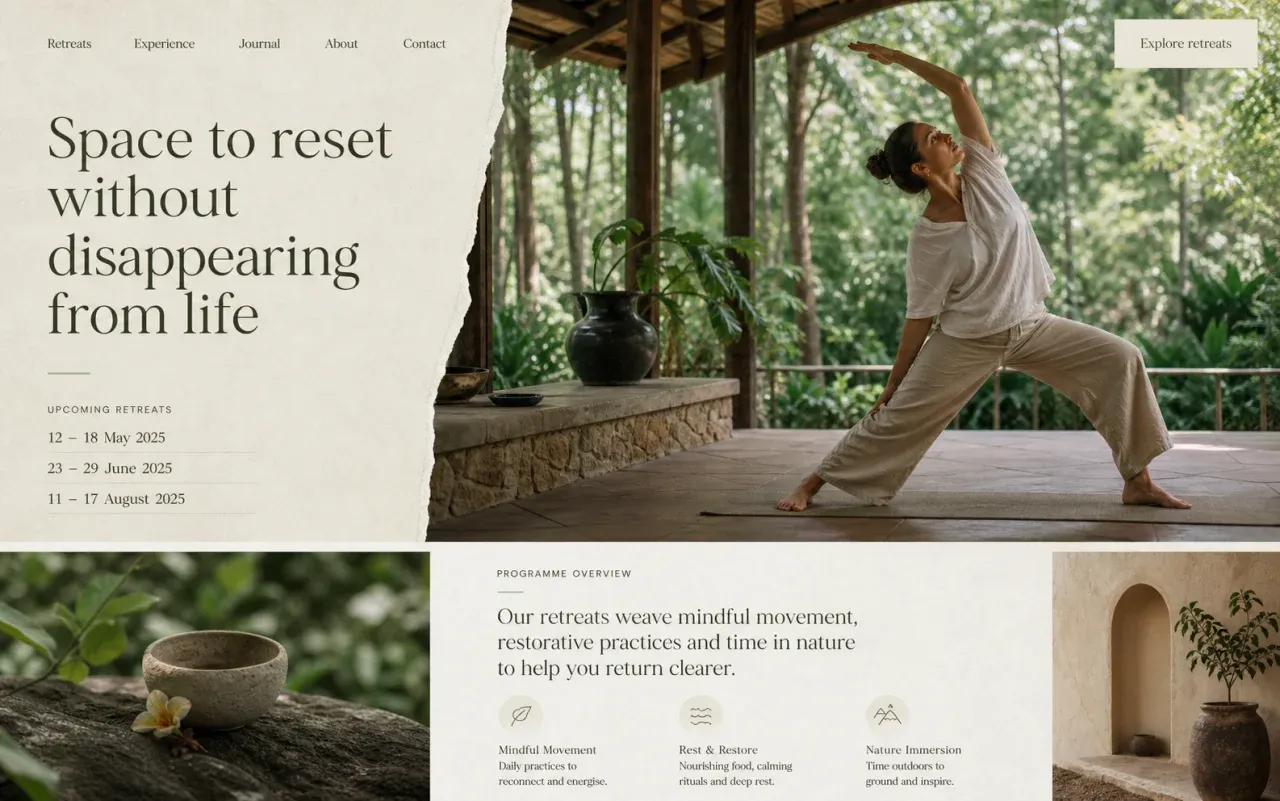
Guests considering a retreat need a practical account of the program, dates, accommodation and daily schedule before they are asked to apply or book.
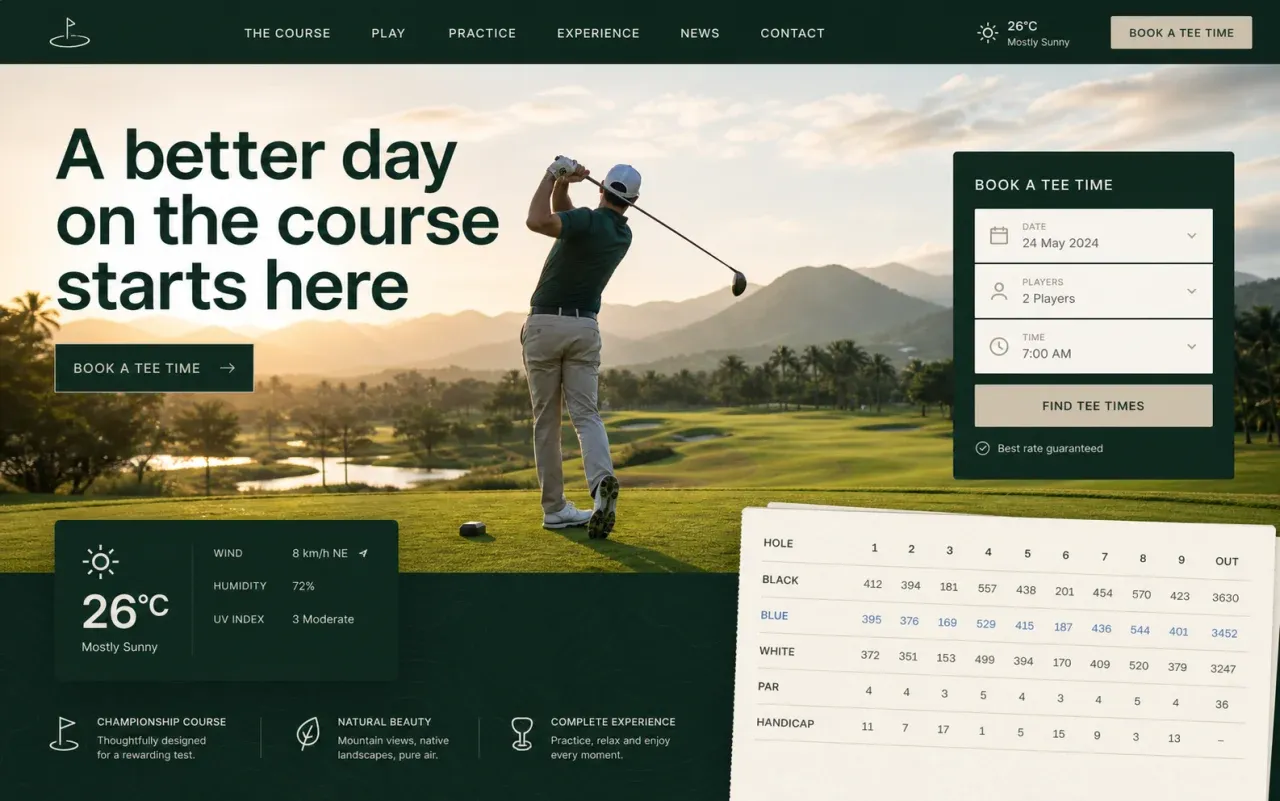
Course information, green fees, tee-time booking, membership and guidance for visitors should be available through one coherent website.
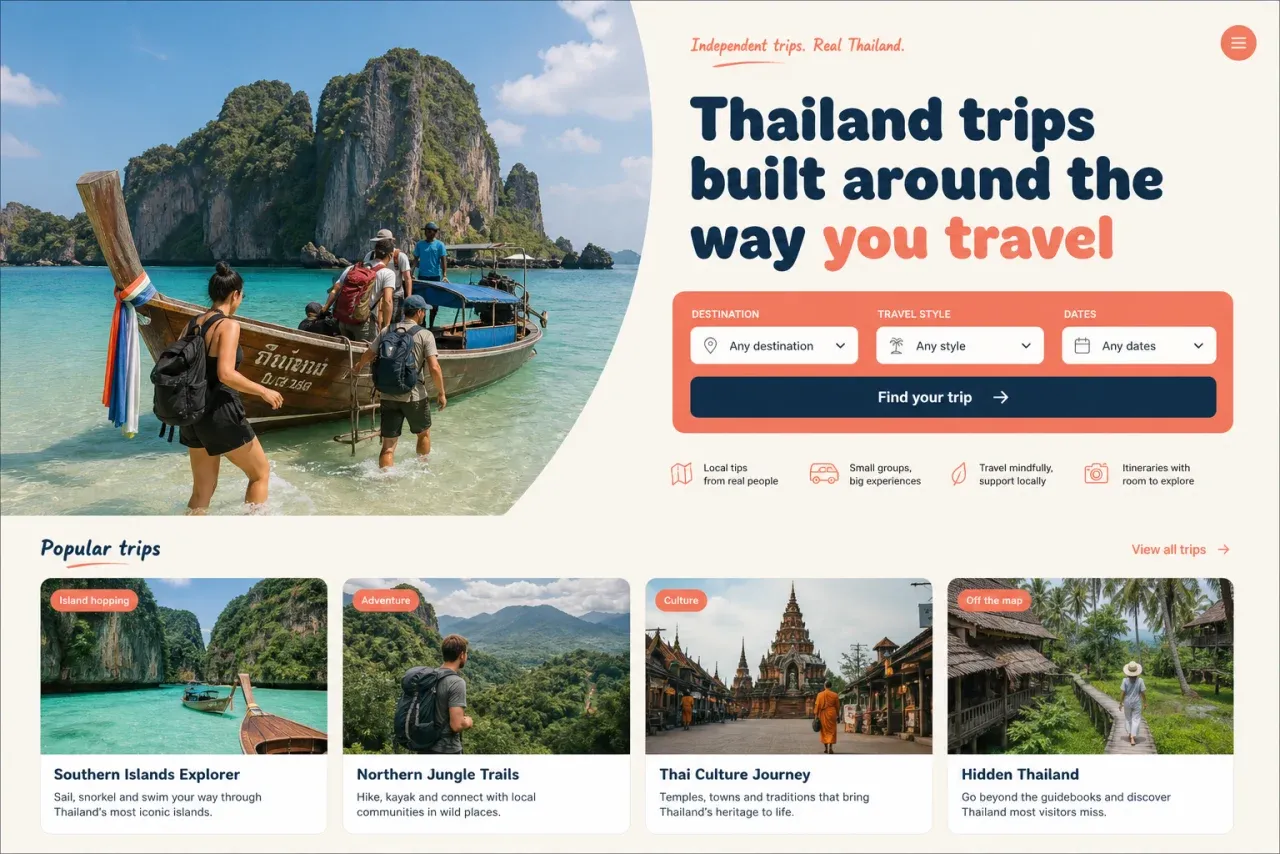
A tour operator needs searchable trips, complete itineraries and an enquiry or booking process that fits the way its holidays are actually sold.
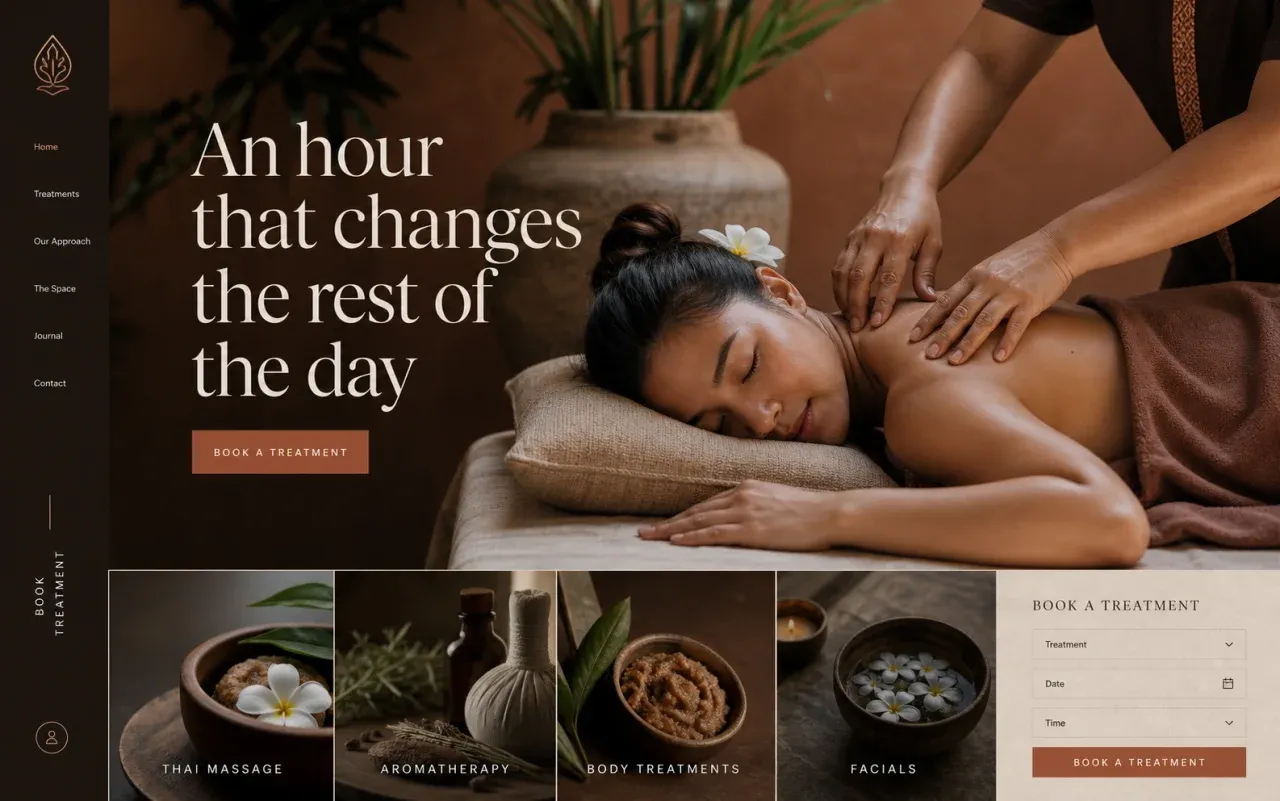
Treatments should be organized in terms customers understand, with prices, duration, practitioner details and available booking times close at hand.
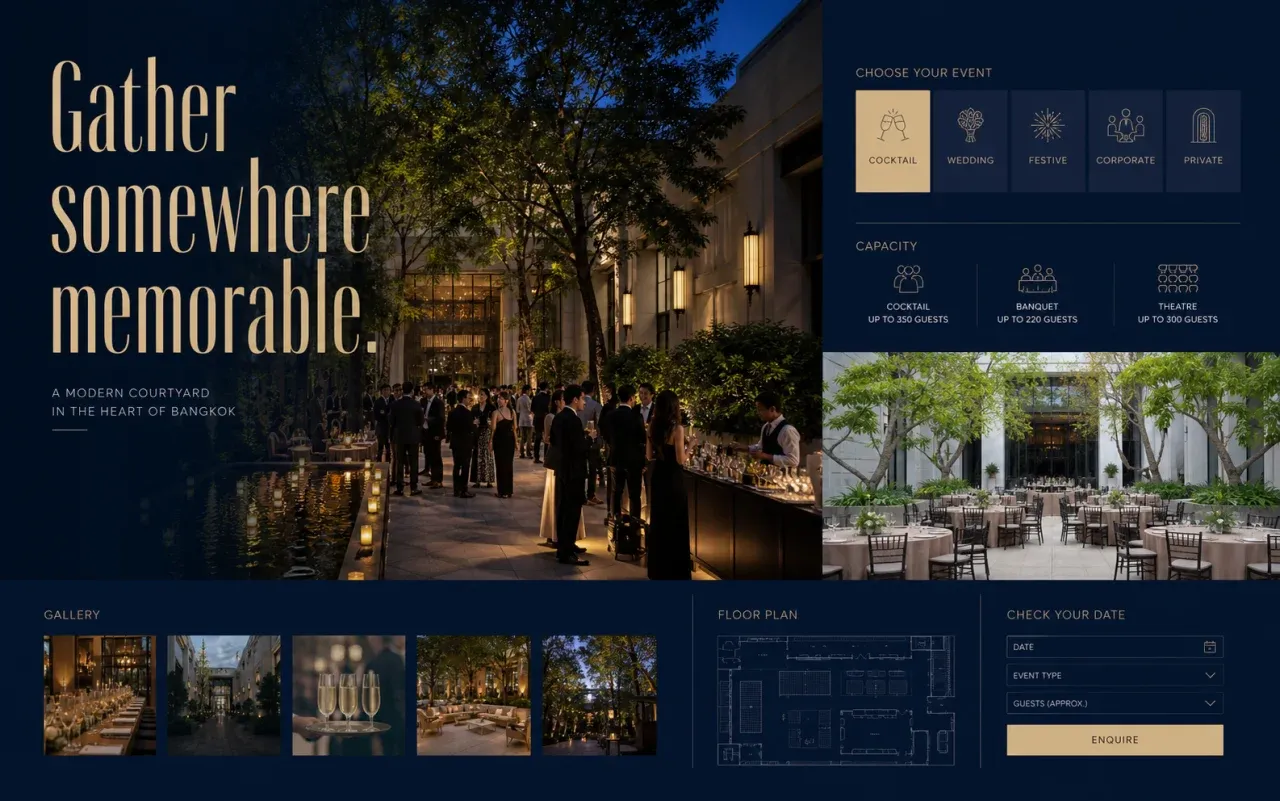
An event venue website should show each space, its capacity and available packages, then explain what information is needed to check a date.
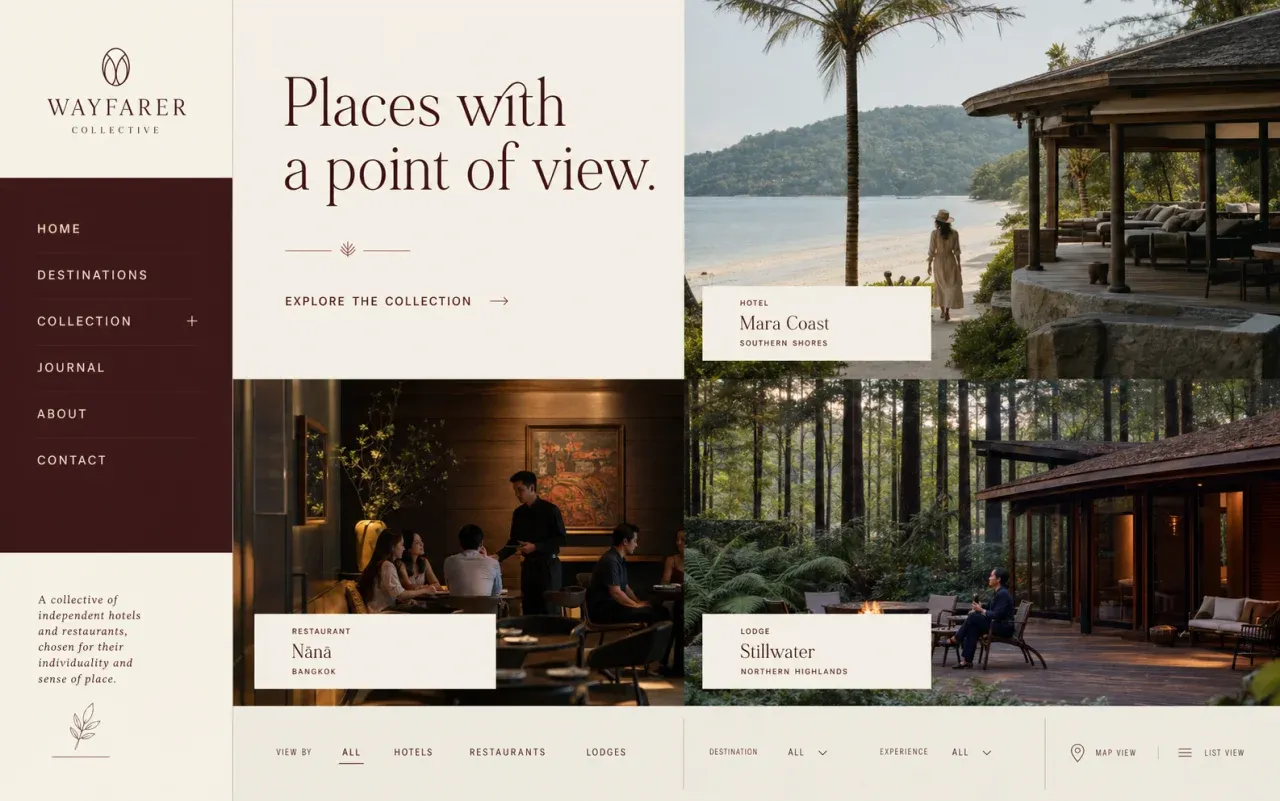
A hospitality group needs a shared structure for properties, restaurants and offers while preserving the character and booking route of each venue.
Clear routes through services, programs, practitioners and appointments.
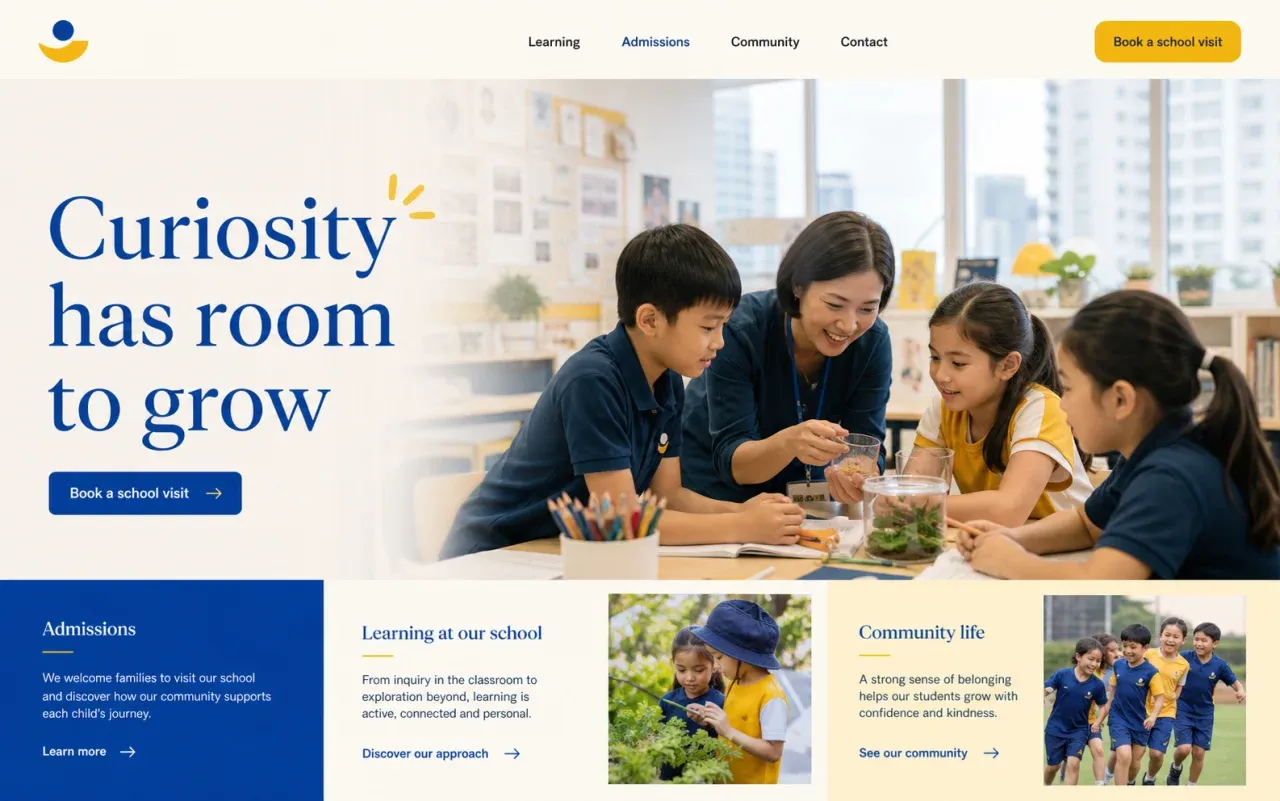
Parents need to compare programs, understand the admissions process, learn about the school community and arrange a visit without searching across several sections.
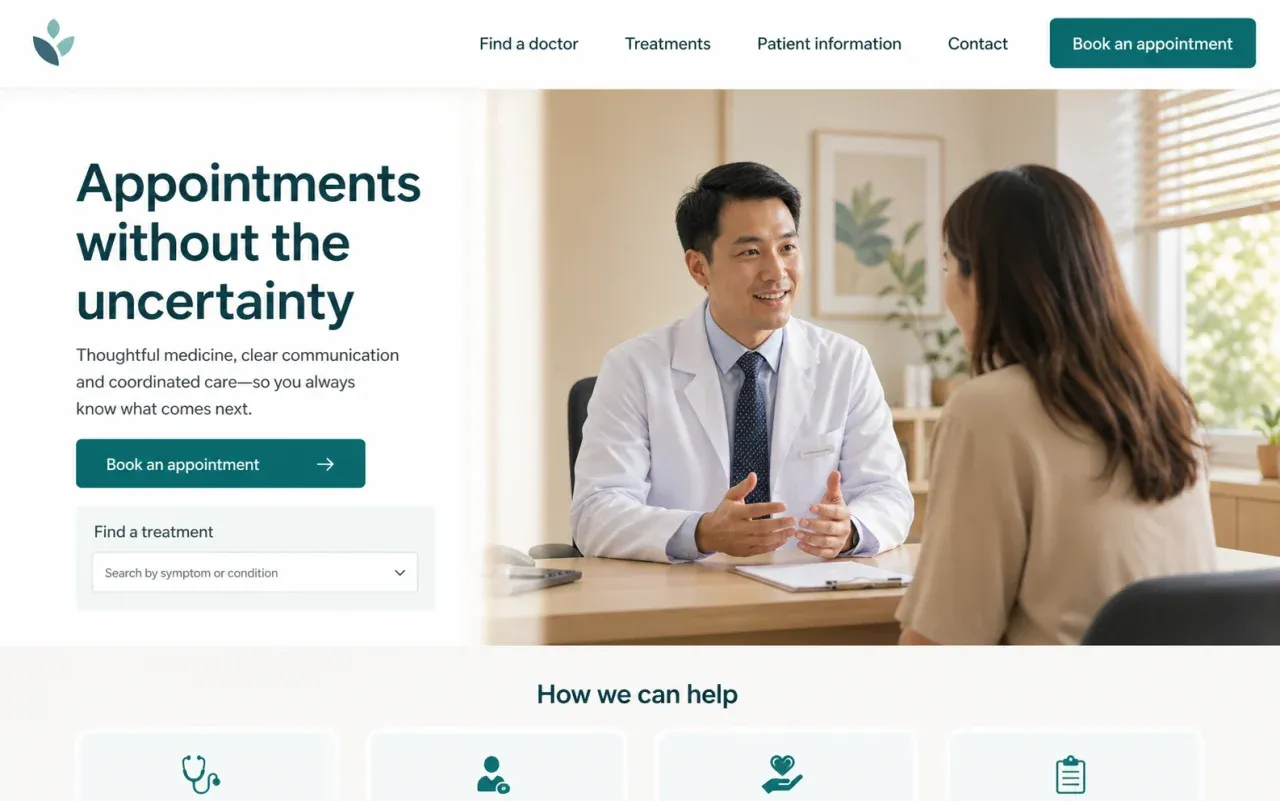
A clinic website should explain treatments in understandable language, introduce the practitioners and provide a direct route to an appropriate appointment.
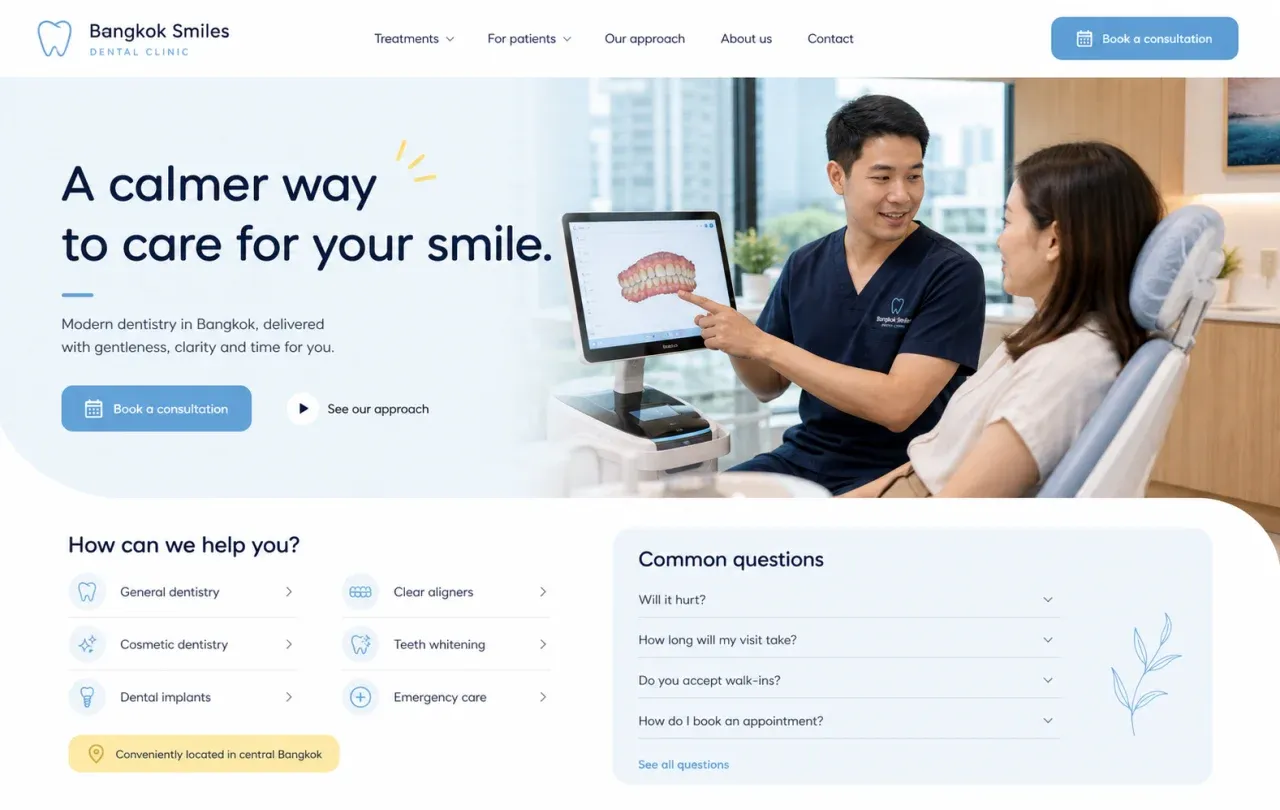
Dental patients often want to understand the treatment, clinician, likely process and consultation options before they are ready to make contact.
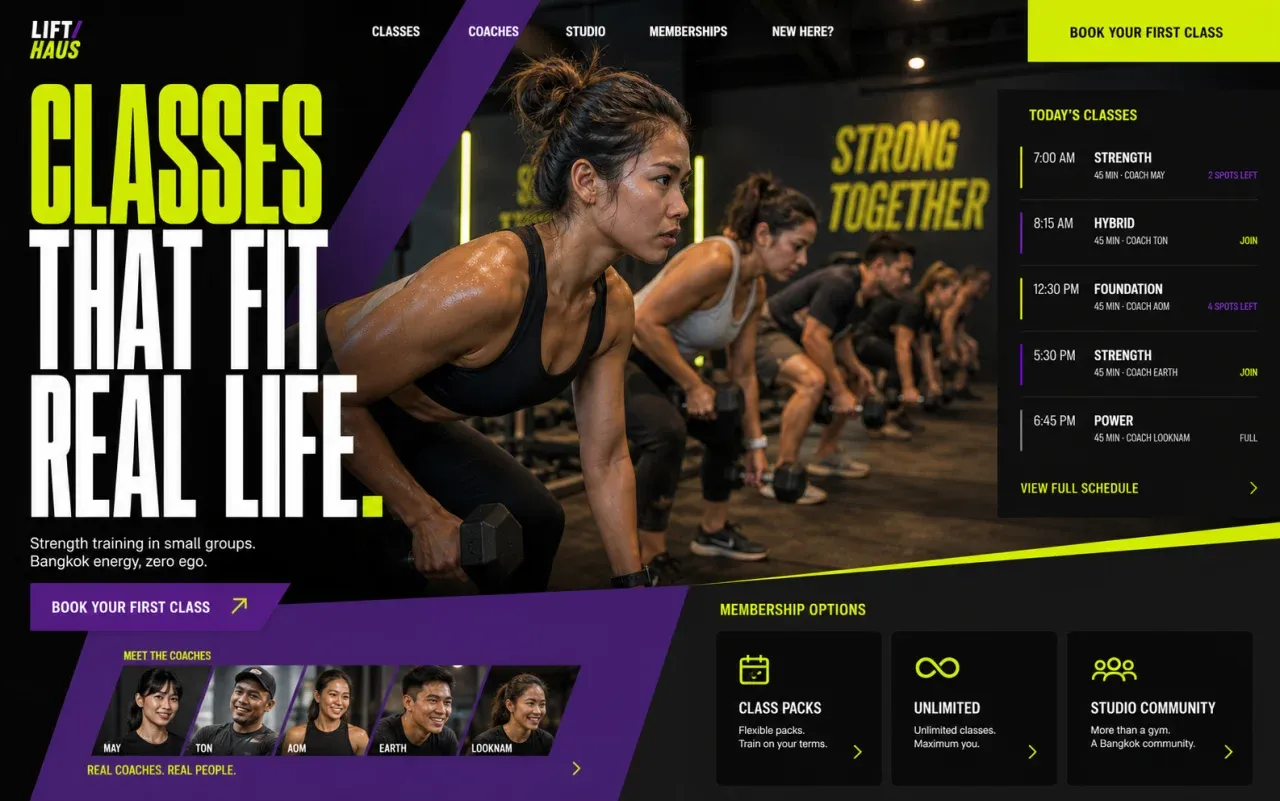
A fitness studio should make its timetable, class types, instructors, membership options and trial booking understandable to someone visiting for the first time.
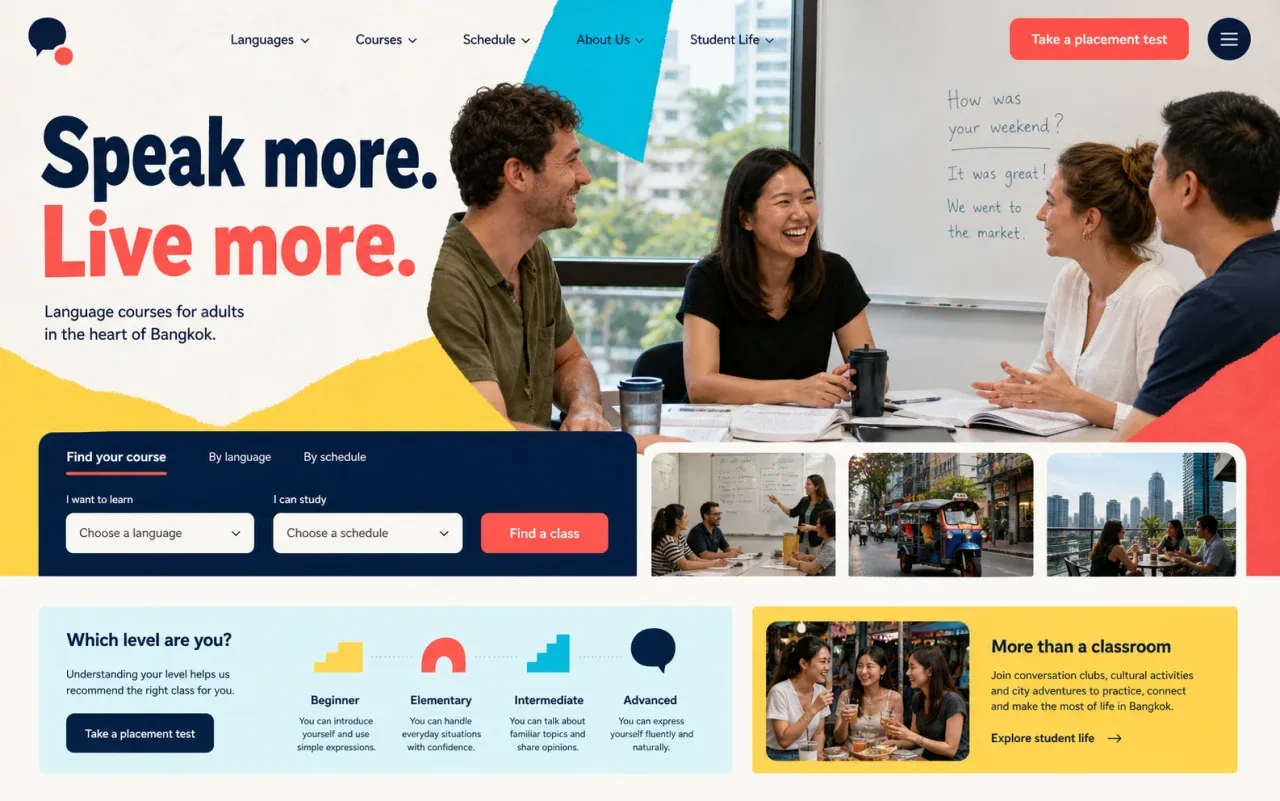
International students need to compare courses and schedules while also understanding enrollment, visas, accommodation and day-to-day life in Thailand.
Trust, expertise and complex offers organized for careful comparison.
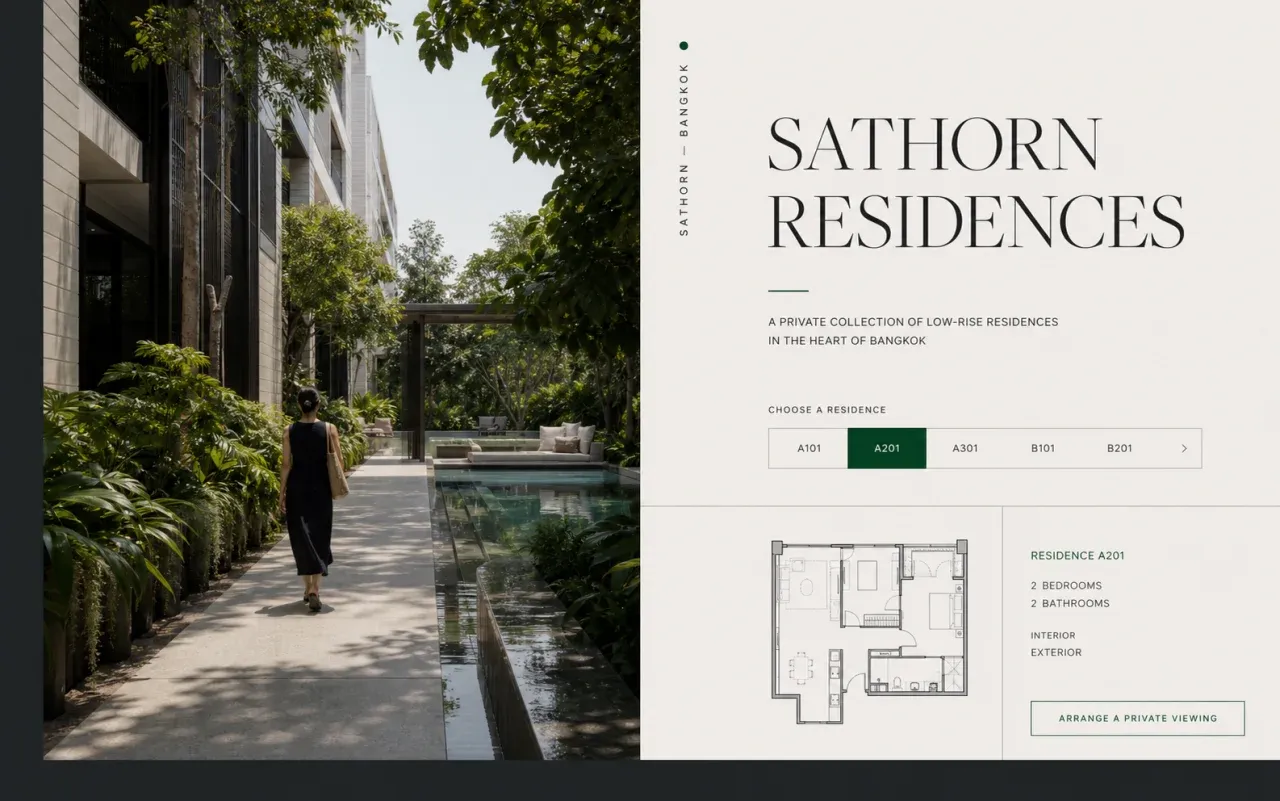
A development website should connect the location, available residences, floor plans and purchasing information before asking a prospective buyer to enquire.

Professional services websites need well-defined areas of expertise, credible team profiles and enough context for a prospective client to decide whom to contact.
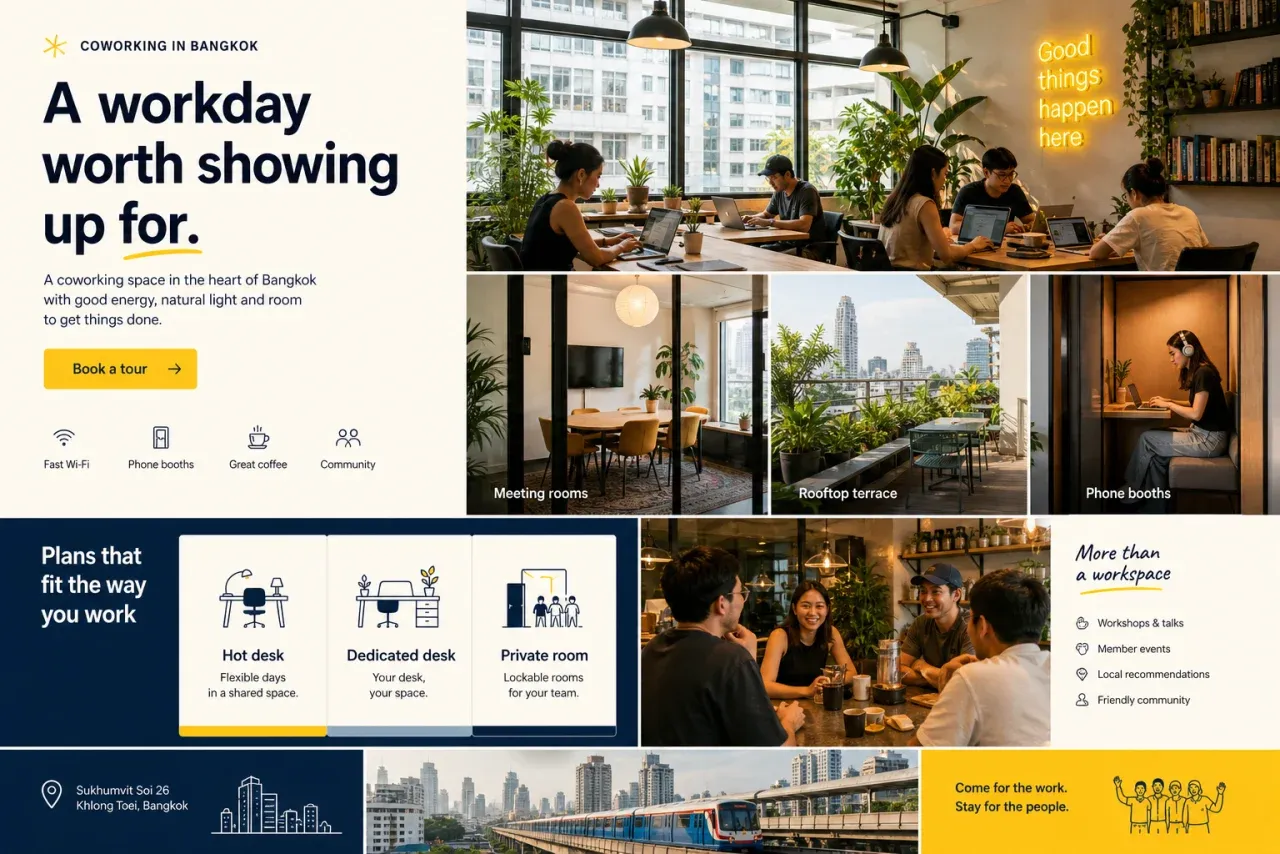
Prospective members need to compare workspaces and plans, see the facilities and arrange a tour before deciding where they want to work.
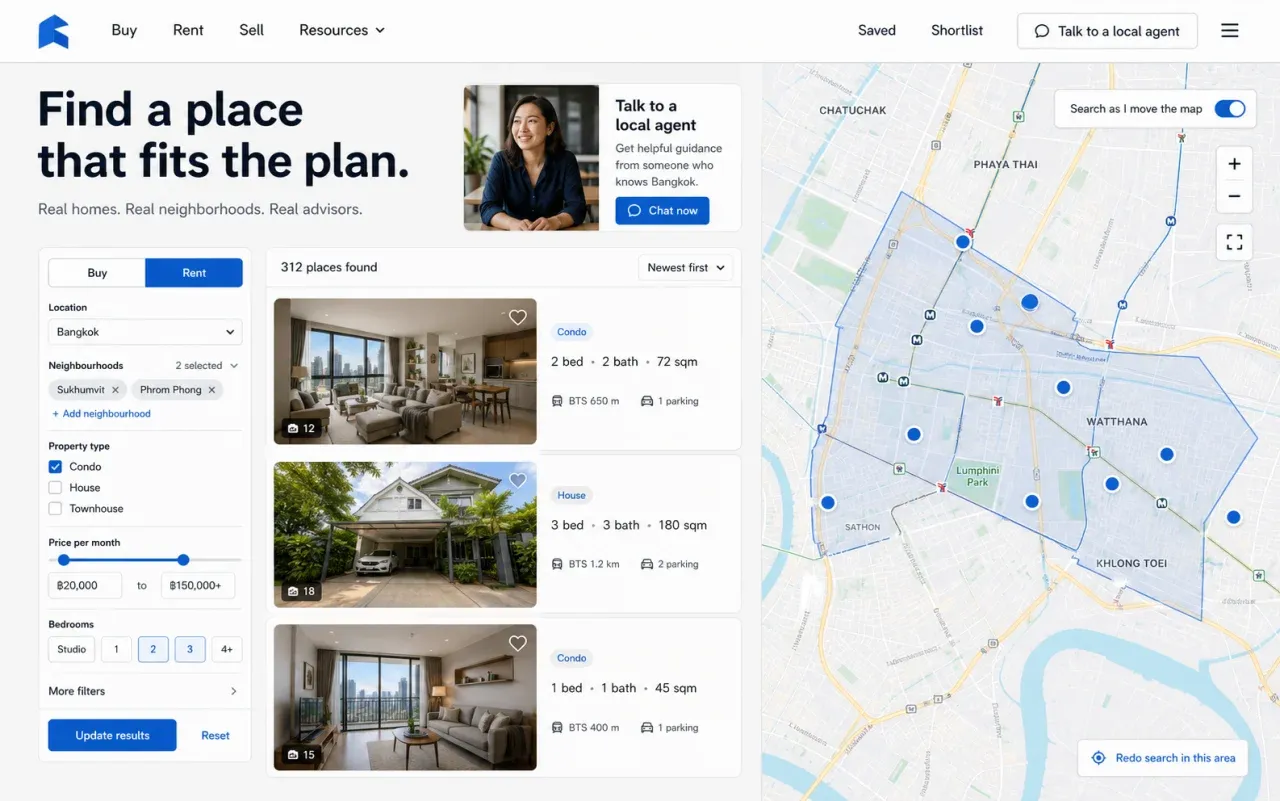
Property search, maps, listing details, saved alerts and agent contact should work together for buyers or renters researching the Bangkok market.
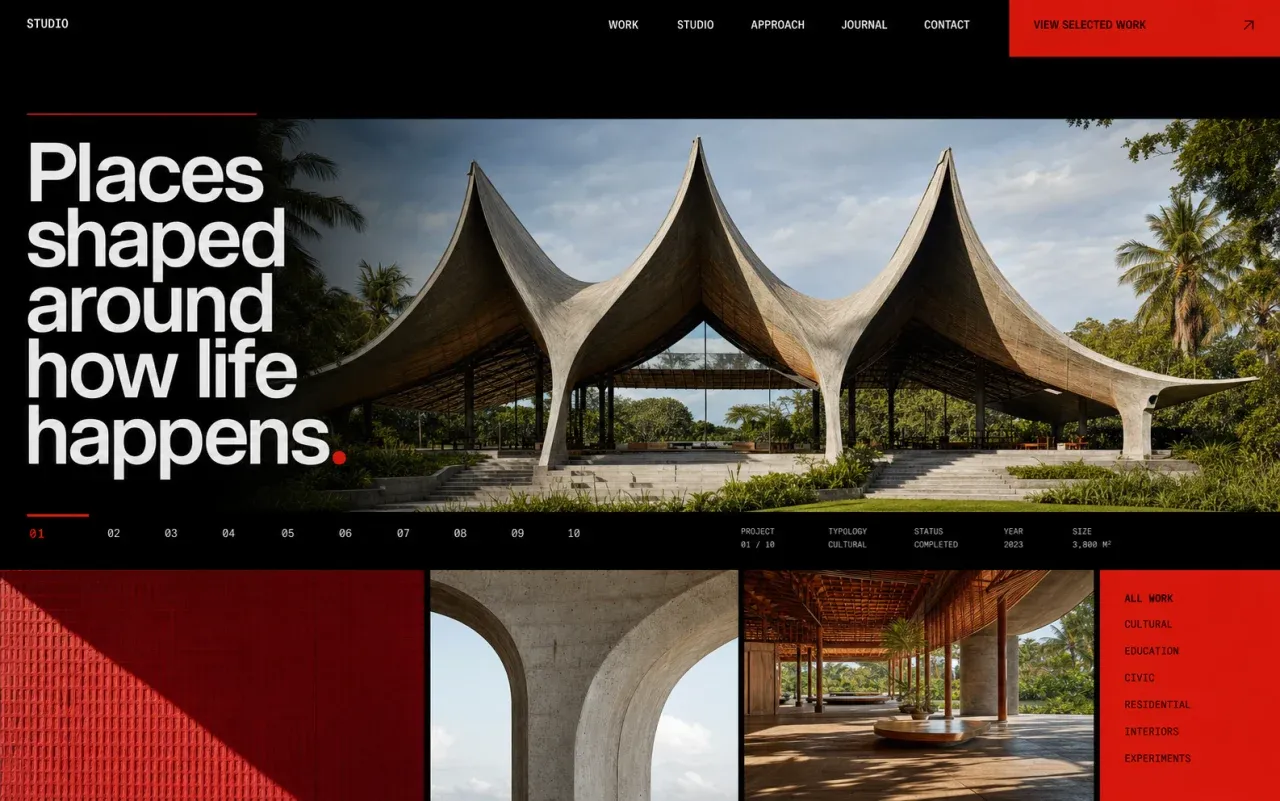
Architecture practices usually need detailed project case studies supported by a concise account of the studio, its services and how to discuss a commission.
Product information and buying decisions made easier to navigate.

Industrial buyers need product categories, specifications, technical downloads and quote requests organized around how they compare and select equipment.
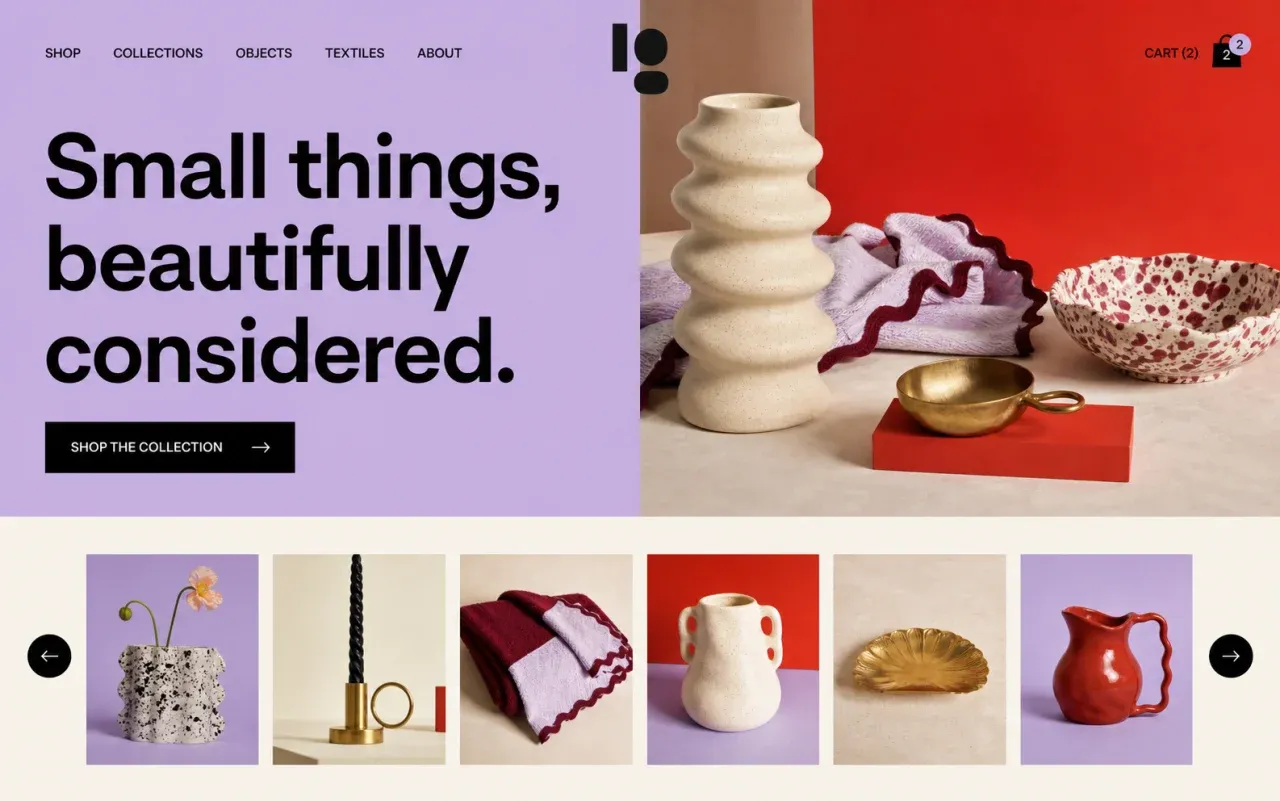
A specialist online shop can give the brand and products a distinctive presentation while keeping product details, delivery and checkout straightforward.